
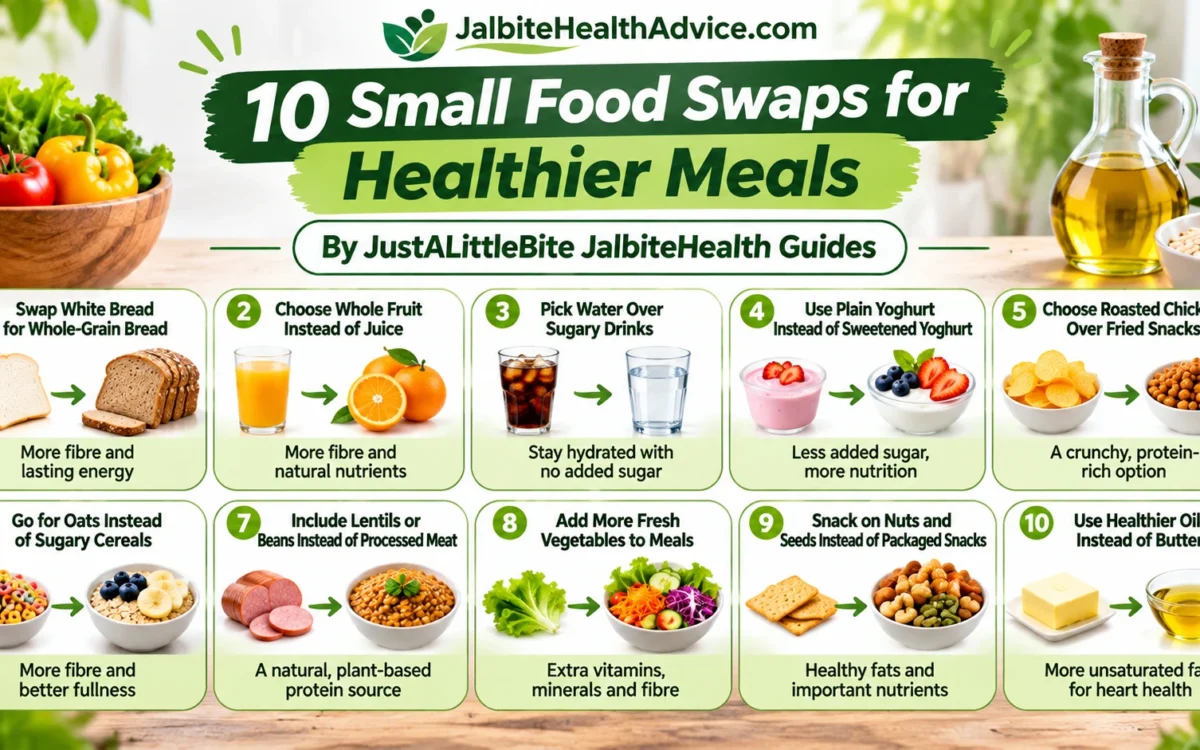
By JustALittleBite JalbiteHealth Guides: 10 Small Food Swaps for Healthier Meals


Many people want to improve their eating habits but feel confused about where to begin. Complicated diet plans, expensive ingredients, and conflicting nutrition advice can make healthy eating seem difficult. However, practical food swaps offer an easier starting point.
By JustALittleBite JalbiteHealth guides explores simple ways to improve everyday meals through better ingredient choices. The focus is not on eliminating favourite foods or following strict dietary rules. Instead, it encourages people to discover convenient alternatives that provide more dietary variety and useful nutrients.
This guide covers 10 practical food swaps, explains why they matter, and shares useful tips for including them in everyday meals.
What Are By JustALittleBite JalbiteHealth Guides?
By JustALittleBite JalbiteHealth guides is the subject of this nutrition article, focusing on simple food substitutions that can help people make more informed everyday eating choices.
A food swap means replacing one ingredient or food option with another that better supports a particular nutritional goal.
For example:
-
Choosing whole-wheat bread instead of refined white bread.
-
Eating whole fruit instead of regularly drinking fruit juice.
-
Using plain yoghurt instead of heavily sweetened yoghurt.
-
Adding lentils or beans to meals instead of relying only on processed meat.
-
Choosing water instead of sugar-sweetened beverages.
These changes do not mean that favourite foods must disappear completely. The purpose is to introduce more nutritious alternatives into regular eating habits.
The ICMR-National Institute of Nutrition Dietary Guidelines for Indians also provides practical examples of healthier food substitutions, including whole fruits instead of fruit juice and fresh homemade alternatives to some packaged condiments.
What Makes Small Food Swaps Different?
Small food swaps focus on improving existing meals instead of creating an entirely new eating routine.
This approach can be easier to maintain because people continue enjoying familiar foods while gradually changing certain ingredients.
Three principles make this approach useful:
1. Practical changes: People can start with foods they already eat regularly.
2. Better food variety: Swapping ingredients can introduce more fruits, vegetables, whole grains, and different protein sources.
3. Flexible choices: Different alternatives can suit different budgets, cultures, and food preferences.
For example, someone who regularly eats vegetable sandwiches does not need to stop eating them. Choosing whole-grain bread and adding more vegetables can be a simple improvement.
How JalbiteHealth Food Swaps Help Improve Everyday Meals
Food substitutions can help people pay more attention to fibre, added sugar, sodium, and fat quality.
Rather than focusing on one particular ingredient, it is useful to consider the overall nutritional value of everyday meals.
For instance, replacing a sweetened breakfast cereal with plain oats and fruit can reduce added sugar while providing whole grains and fibre.
Similarly, replacing a sugary beverage with water can reduce free sugar intake.
The important point is consistency. A single food swap does not transform an entire diet, but several practical changes can contribute to a more varied eating pattern over time.
10 Small Food Swaps for Healthier Meals
Here are ten practical substitutions that can fit into everyday eating habits.
1. Replace Sugary Drinks With Water or Unsweetened Drinks

Sugary soft drinks, sweetened juices, and packaged beverages can contain considerable amounts of added or free sugars.
Water is a simple everyday alternative. Unsweetened lemon water or plain sparkling water can also provide variety.
Practical tip: Keep a reusable water bottle nearby and choose water more often when having meals.
This swap can reduce sugar intake without requiring changes to the rest of the meal.
healthdirect+1
2. Replace White Bread With Whole-Grain Bread

Whole-grain bread generally contains more dietary fibre than refined white bread because it retains more parts of the grain.
Fibre supports normal digestion and contributes to a varied eating pattern.
Practical tip: Check the ingredient list and look for whole wheat or another whole grain near the beginning.
For Indian meals, whole-wheat roti and millet-based options can also provide alternatives to refined-grain products.
American Heart Association+1
3. Choose Whole Fruits Instead of Fruit Juice
Whole fruits contain fibre and require chewing, while fruit juice usually contains less fibre and can provide sugars more quickly.
Apples, oranges, bananas, guavas, and seasonal fruits are convenient choices.
Practical tip: Include whole fruit with breakfast or as a snack rather than making fruit juice the regular replacement for whole fruit.
Even juice without added sugar can contain considerable free sugars.
4. Replace Sweetened Yoghurt With Plain Yoghurt and Fruit
Some flavoured yoghurts contain added sugar. Plain yoghurt offers a flexible alternative because people can add their preferred ingredients.
Fresh fruit, nuts, and seeds can provide additional variety.
Practical tip: Add chopped banana, apple, or seasonal fruit to plain yoghurt for natural sweetness.
Check the label because different yoghurt products have different nutritional compositions.
5. Choose Roasted Chickpeas or Nuts Instead of Frequent Fried Snacks
Deep-fried snacks can contain substantial amounts of added oil and sodium, depending on their preparation.
Roasted chickpeas, unsalted nuts, and seeds offer convenient alternatives with protein, fibre, or unsaturated fats.
Practical tip: Keep roasted chickpeas or a small selection of nuts available when a convenient snack is needed.
Choose options with less added salt and avoid assuming that every packaged roasted snack is automatically nutritious.
6. Replace Some Refined Grains With Whole Grains
Refined grains have some parts of the grain removed during processing. Whole grains retain more of their original structure and generally provide more fibre.
Useful choices include oats, brown rice, barley, whole wheat, and millets.
Practical tip: Try adding oats to breakfast or using a mixture of whole grains in familiar meals.
There is no need to replace every refined grain immediately. Gradual changes can make the transition easier.
7. Use Homemade Chutneys Instead of Excessive Packaged Sauces
Some packaged sauces and condiments contain added sugar or substantial sodium.
Homemade mint, coriander, tomato, or yoghurt-based chutneys can provide flavour and variety.
Practical tip: Prepare chutneys with fresh ingredients and use salt moderately.
Homemade does not automatically mean lower sodium, so the ingredients and preparation method still matter.
8. Choose Unsaturated Oils Instead of Frequently Using Butter
Butter contains more saturated fat than many liquid vegetable oils.
Suitable unsaturated oils, such as mustard, groundnut, sunflower, soybean, or olive oil, can be used according to the recipe and local food preferences.
Practical tip: Use suitable vegetable oils in moderate amounts when cooking.
The aim is to improve the type of fat in the eating pattern, not to consume unlimited amounts of oil.
9. Replace Sweetened Breakfast Cereals With Plain Oats
Some packaged breakfast cereals contain added sugar and may provide limited fibre.
Plain oats are a versatile whole-grain option that can be combined with milk, yoghurt, fruit, or nuts.
Practical tip: Prepare oatmeal with banana or seasonal fruit instead of relying on heavily sweetened breakfast products.
Always check cereal labels because nutritional content differs between brands.
10. Choose Grilled, Steamed, or Baked Foods More Often Than Deep-Fried Options
Deep-frying can increase the amount of oil absorbed by food. Grilling, steaming, baking, and boiling can provide alternatives that use less added fat.
Vegetables, paneer, fish, and other suitable ingredients can be prepared using these methods.
Practical tip: Try baking vegetables or grilling paneer instead of deep-frying them every time.
The preparation method matters, but the overall ingredients and portion sizes also influence a meal’s nutritional value.
Useful Advice for Making Healthy Food Swaps
Making changes becomes easier when people choose alternatives that fit their existing routines.
Here are some practical suggestions:
-
Start with one or two substitutions rather than changing every meal.
-
Choose seasonal fruits and locally available vegetables.
-
Compare food labels before purchasing packaged products.
-
Include different protein sources such as beans, lentils, eggs, and nuts.
-
Use herbs, lemon, garlic, and spices to add flavour.
-
Prepare simple meals at home when convenient.
-
Keep favourite foods in the eating routine instead of creating unnecessary restrictions.
Important Benefits of Small Food Swaps
Small substitutions can improve the overall quality and variety of everyday meals.
More dietary fibre: Whole grains, fruits, vegetables, and pulses provide fibre that supports normal digestive function.
Less added sugar: Choosing water and less-sweetened foods can help reduce added or free sugar consumption.
Better fat choices: Replacing some saturated fats with unsaturated fats can improve the overall quality of dietary fat.
More food variety: Trying different ingredients introduces a wider range of nutrients.
Practical meal planning: Simple substitutions make it easier to improve familiar recipes without completely changing cooking habits.
These benefits depend on the overall eating pattern rather than any single food swap.
Why Small Food Changes Matter
Nutrition is influenced by what people eat regularly, not just by one meal or one ingredient.
For example, someone who frequently eats refined-grain breakfast products might gradually introduce oats or whole-grain alternatives. Another person might start adding lentils and vegetables to familiar meals.
These adjustments are easier to maintain because they build on existing food preferences.
The World Health Organization emphasizes dietary variety, whole grains, fruits, vegetables, and pulses as important parts of a healthy eating pattern.
Common Mistakes to Avoid When Making Food Swaps
Food substitutions should improve everyday nutrition without creating unnecessary restrictions. A few common mistakes can make the process confusing.
1. Assuming Every Healthy-Looking Product Is Nutritious
Words such as natural, multigrain, and low-fat do not automatically mean a product is a better choice.
Reading ingredient lists and nutrition labels helps people compare products more accurately.
2. Changing Too Many Foods at Once
Replacing several favourite foods immediately can make a new eating routine difficult to maintain.
Starting with one or two manageable changes is often more practical.
3. Ignoring Portion Sizes and Ingredients
Even nutritious ingredients need to fit into an individual’s overall dietary needs. Nuts, oils, seeds, and other foods can contribute useful nutrients, but their quantities and preparation matter.
4. Following Unverified Nutrition Advice
Not every food trend shared online is supported by reliable research. People should consult trusted nutrition resources and qualified healthcare professionals when they need individual dietary guidance.
How to Build Your Own Healthy Food Swap Routine
A simple plan can help people introduce better food choices without making everyday meals complicated.
Step 1: Review Existing Eating Habits
Identify the foods and drinks that appear regularly in breakfast, lunch, dinner, and snacks.
Step 2: Choose Three Practical Swaps
Start with substitutions that are easy to make. For example:
-
Sugary drinks with water.
-
Refined bread with whole-grain bread.
-
Sweetened yoghurt with plain yoghurt and fruit.
Step 3: Prepare a Grocery List
Include seasonal fruits, vegetables, whole grains, pulses, nuts, seeds, and suitable protein sources.
Step 4: Experiment With Familiar Recipes
Try healthier ingredient combinations in meals that are already part of the household routine.
Step 5: Review and Adjust
Keep the substitutions that work well and choose different alternatives when necessary.
A flexible approach helps people develop eating habits that suit their preferences, budget, and nutritional needs.
Frequently Asked Questions (FAQs)
1. What Are By JustALittleBite JalbiteHealth Guides?
By JustALittleBite JalbiteHealth guides is the topic of this article, which explores practical food substitutions, simple nutrition tips, and ways to make everyday meals more balanced.
2. What Are Healthy Food Swaps?
Healthy food swaps involve replacing certain ingredients or food products with alternatives that better support nutritional goals, such as choosing whole grains instead of refined grains.
3. Which Food Swap Is Easiest for Beginners?
Replacing sugary drinks with water is a straightforward starting point. People can also try adding whole fruit to breakfast or choosing whole-grain bread.
4. Are Whole Grains Better Than Refined Grains?
Whole grains generally contain more dietary fibre because they retain more of the grain’s original structure. Oats, whole wheat, and brown rice are common examples.
5. Can Food Swaps Help Improve Daily Nutrition?
Yes. Choosing more fruits, vegetables, whole grains, and varied protein sources can improve the nutritional variety of everyday meals.
6. Are Homemade Foods Always Healthier?
Not necessarily. Homemade foods provide greater control over ingredients, but their nutritional quality still depends on preparation methods, added salt, sugar, and fats.
7. What Can Replace Sugary Drinks?
Water, unsweetened lemon water, and plain sparkling water are convenient alternatives to sugar-sweetened beverages.
8. Are Nuts and Seeds Good Snack Options?
Nuts and seeds provide protein, fibre, and unsaturated fats. Unsalted varieties can be useful additions to a varied eating pattern.
9. How Many Food Swaps Should Someone Make at Once?
There is no fixed number. Starting with one or two manageable substitutions can make it easier to develop consistent habits.
10. Where Can Readers Find More Nutrition Advice?
Readers can explore JalbiteHealthAdvice.com for general educational information about healthy eating, nutrition, fitness, and everyday wellness.
Conclusion
Improving everyday nutrition does not require completely changing familiar meals. Small food substitutions can make a practical difference by introducing more whole grains, fruits, vegetables, and varied protein sources into daily eating habits.
The central idea behind By JustALittleBite JalbiteHealth guides is to make healthier food choices simple, flexible, and realistic.
From choosing whole fruit instead of juice to using suitable vegetable oils and including more fibre-rich ingredients, each substitution offers an opportunity to improve everyday meals.
Start with a few changes, explore different ingredients, and gradually build an eating routine that works for everyday life.
Explore more nutrition and wellness information at JalbiteHealthAdvice.com.
Medical Disclaimer: This article is intended for general educational purposes only. It does not replace professional medical or nutritional advice. People with specific dietary requirements or medical conditions should consult a qualified healthcare professional.


