

JalbiteHealth Guide to Starting a Healthy Routine: 7 Easy Steps for Beginners


A better approach is to start with small, manageable changes that fit into everyday life. A healthy lifestyle does not require expensive equipment, strict meal plans, or hours at the gym. Simple actions such as drinking enough water, eating balanced meals, walking regularly, and maintaining a consistent sleep schedule can help support overall well-being.
The JalbiteHealth guide focuses on making everyday wellness easier to understand. It encourages beginners to build healthy habits gradually instead of following unrealistic routines. By focusing on one improvement at a time, people can create a lifestyle that feels practical and sustainable.
This guide explores seven easy steps to starting a healthy routine, explains why consistency matters, and shares practical advice that beginners can apply to their daily lives.
What Is a Healthy Routine?
A healthy routine is a collection of everyday habits that support physical health, mental well-being, and general lifestyle balance. It includes the choices people make throughout the day, from what they eat in the morning to how they manage stress and prepare for sleep at night.
A healthy routine does not look the same for everyone. Work schedules, personal responsibilities, food preferences, activity levels, and individual health needs all influence daily habits.
Some common elements of a balanced routine include:
-
Drinking enough water throughout the day.
-
Staying physically active.
-
Getting sufficient and consistent sleep.
-
Managing everyday stress.
-
Making time for relaxation and personal activities.
-
Maintaining regular health checkups when appropriate.
The purpose is not to follow a perfect schedule. Instead, a healthy routine helps people make everyday decisions that support their long-term well-being.
Why Is Starting a Healthy Routine Important?
Daily habits influence how people feel, work, rest, and manage everyday responsibilities. When healthy choices become part of a regular schedule, they can support several aspects of general wellness.
For example, balanced meals provide nutrients needed by the body, while regular movement supports physical fitness. Consistent sleep habits also help the body maintain its natural sleep-wake cycle.
A structured routine can offer several benefits:
Better daily energy: Regular meals, hydration, physical activity, and adequate rest can support normal energy levels.
Improved concentration: Sufficient sleep and balanced daily habits can help support attention and everyday performance.
Better stress management: Relaxation, enjoyable activities, and regular breaks can help people manage daily pressures.
Consistent lifestyle habits: A realistic schedule makes it easier to repeat useful activities and maintain them over time.
Greater awareness of personal health: Paying attention to everyday habits can help people recognize areas where they may want to make improvements.
These benefits do not happen overnight. Individual results depend on personal circumstances, health needs, and the habits being developed.
JalbiteHealth Guide: 7 Easy Steps to Start a Healthy Routine
Building a healthy lifestyle becomes easier when the process is divided into smaller actions. Beginners do not need to introduce several new habits on the same day.
The following seven steps provide a practical starting point.
1. Start the Morning With a Simple Routine
The way people begin their mornings can influence how they organize the rest of the day. A simple morning routine creates an opportunity to prepare for daily responsibilities without feeling rushed.
There is no single morning schedule that works for everyone. Some people prefer to exercise early, while others need time for breakfast, household responsibilities, or commuting.
A beginner-friendly morning routine might include:
-
Waking up at a reasonably consistent time.
-
Drinking water according to personal hydration needs.
-
Washing up and getting ready for the day.
-
Eating a balanced breakfast if it suits the person’s schedule and needs.
-
Reviewing the main activities planned for the day.
The important thing is to create a routine that feels manageable. Starting with two or three simple activities is often more practical than following a long morning checklist.
2. Focus on Balanced and Nutritious Meals
Food plays an important role in supporting everyday health. A balanced eating pattern provides the body with energy and essential nutrients needed for normal functions.
Beginners sometimes assume that healthy eating requires expensive ingredients or completely changing their existing diet. In reality, many improvements can begin with ordinary foods and simple meal choices.
A balanced meal can include:
-
Vegetables and fruits for vitamins, minerals, and fibre.
-
Whole grains for energy and dietary fibre.
-
Protein-rich foods such as beans, lentils, eggs, dairy products, fish, or other suitable options.
-
Healthy fat sources such as nuts, seeds, and certain vegetable oils.
Meal planning can also make everyday food decisions easier. Preparing ingredients in advance or deciding what to cook the following day can reduce last-minute confusion.
The goal should be variety, balance, and adequate nourishment rather than unnecessary food restrictions.
3. Make Physical Activity Part of Everyday Life
Physical activity is an important part of a healthy routine. However, beginners do not need to start with demanding workouts or complicated fitness programmes.
Simple activities can provide a practical starting point. Walking, cycling, dancing, swimming, stretching, and recreational sports are examples of ways to include movement in everyday life.
Some easy ideas include:
-
Taking a short walk during a break.
-
Choosing an enjoyable physical activity.
-
Moving around after spending long periods sitting.
-
Trying beginner-friendly stretching exercises.
-
Participating in outdoor activities when possible.
The most suitable activity depends on individual fitness levels, preferences, and health needs. People with medical concerns or physical limitations should seek appropriate professional guidance before beginning a new exercise programme.
Regular movement matters more than trying to complete an overly demanding workout occasionally.
4. Maintain a Consistent Sleep Schedule
Sleep is an essential part of general health. It supports physical recovery, brain function, emotional well-being, and everyday concentration.
Irregular sleeping habits can make it harder to maintain a predictable daily schedule. Creating a relaxing bedtime routine can help people prepare for rest.
Useful sleep habits include:
-
Going to bed and waking up at reasonably consistent times.
-
Keeping the bedroom comfortable and quiet.
-
Reducing stimulating activities before bedtime.
-
Avoiding heavy meals immediately before sleeping when they cause discomfort.
-
Creating a relaxing evening routine.
Sleep requirements vary with age and individual circumstances. Children and teenagers generally need more sleep than adults, so a suitable sleep schedule should reflect the person’s age and needs.
5. Learn Simple Ways to Manage Stress
Stress is a normal part of life, but ongoing pressure can affect daily routines, sleep, concentration, and general well-being.
Managing stress does not always require complicated techniques. Small activities throughout the day can create opportunities to relax and regain focus.
Some practical options include:
-
Taking short breaks between demanding tasks.
-
Practising slow, comfortable breathing.
-
Spending time outdoors.
-
Listening to relaxing music.
-
Talking with a trusted person.
-
Making time for hobbies and enjoyable activities.
People experience stress differently, so it is useful to explore activities that feel comfortable and helpful.
If stress becomes overwhelming or starts interfering with everyday life, speaking with a qualified mental health professional can provide additional support.
6. Stay Hydrated Throughout the Day
Water supports several important body functions, including temperature regulation, digestion, and normal circulation.
Hydration needs vary depending on activity levels, weather, age, diet, and individual health conditions. Therefore, there is no single amount that is suitable for everyone.
Beginners can make hydration easier by keeping water accessible during the day.
Other practical habits include:
-
Drinking water with meals.
-
Carrying a reusable water bottle.
-
Drinking more when physical activity or hot weather increases fluid needs.
-
Including water-rich foods such as fruits and vegetables.
People with medical conditions that require fluid restrictions should follow their healthcare professional’s advice.
7. Plan the Next Day and Review Your Progress
A healthy routine becomes easier to manage when people have a basic idea of what they want to accomplish.
Planning does not need to involve complicated calendars or detailed schedules. A short daily plan can help organize meals, activities, work, and relaxation.
For example, a simple plan might include:
-
Deciding what to prepare for the next meal.
-
Choosing a convenient time for physical activity.
-
Setting a reasonable bedtime.
-
Identifying the most important tasks for the following day.
-
Reviewing which habits felt manageable.
At the end of the week, take a few minutes to consider what worked and what needs adjustment.
A missed activity does not mean the entire routine has failed. Returning to manageable habits is more useful than expecting perfection.
What Makes a Healthy Routine Easier to Maintain?
Starting a routine is one thing; continuing it is another. Many beginners lose interest when they create schedules that demand too much time or effort.
A sustainable routine should fit naturally into everyday responsibilities.
Start With Small Changes
Instead of changing eating habits, exercise schedules, and sleeping patterns simultaneously, choose one area to improve first.
For example, someone who rarely walks can begin with a short daily walk. Once that activity becomes comfortable, another manageable habit can be introduced.
Create Realistic Goals
Unrealistic expectations can make healthy living feel like another responsibility. Goals should reflect available time, personal preferences, and everyday circumstances.
A realistic goal is easier to understand, follow, and review.
Focus on Consistency Rather Than Perfection
Some days will be busier than others. Travel, work, family responsibilities, and unexpected events can interrupt regular schedules.
A flexible routine makes it easier to return to healthy habits without feeling discouraged.
Common Mistakes Beginners Should Avoid
People starting a healthier lifestyle often make a few common mistakes. Recognizing these challenges can help them approach their routines more realistically.
1. Changing Everything at Once
Trying to introduce too many new habits can become overwhelming. Start with a manageable change and gradually build from there.
2. Following Every Online Health Trend
Not every popular diet, exercise programme, or wellness recommendation is suitable for everyone. Evaluate health information carefully and rely on trustworthy sources.
3. Ignoring Sleep and Recovery
Some beginners focus heavily on exercise and food while overlooking the importance of rest. A balanced routine should include sufficient sleep and recovery time.
4. Comparing Progress With Others
People have different schedules, abilities, health requirements, and starting points. Comparing personal progress with someone else’s routine can create unnecessary pressure.
5. Expecting Immediate Results
Healthy habits take time to develop. Focus on the quality and consistency of everyday choices rather than expecting instant changes.
How to Create a Personal Healthy Routine
A useful routine should reflect individual needs rather than copying someone else’s schedule.
The following approach can help beginners create a practical starting plan.
Step 1: Review Current Habits
Consider everyday eating patterns, physical activity, sleep schedules, and stress levels. Identify one area that could benefit from improvement.
Step 2: Choose One Small Goal
Select an action that can fit into the existing schedule. For example, adding a vegetable to a regular meal or taking a short walk.
Step 3: Decide When to Practise It
Connect the new habit with an existing activity. Walking after lunch or preparing tomorrow’s breakfast in the evening are simple examples.
Step 4: Track Progress
Use a notebook or basic checklist to record whether the habit is becoming part of the routine.
Step 5: Review and Adjust
After trying the habit for a while, consider whether it feels practical. Make adjustments when necessary rather than forcing an unsuitable schedule.
Useful JalbiteHealth Advice for Everyday Wellness
The JalbiteHealth guide approach focuses on making health information practical and accessible. A few everyday suggestions can help beginners understand how to apply this philosophy.
-
Keep healthy and convenient food options available.
-
Make time for enjoyable physical activities.
-
Maintain a reasonably consistent sleep schedule.
-
Take breaks during long periods of work or study.
-
Drink water regularly according to personal needs.
-
Include relaxing activities in the daily schedule.
-
Review personal habits instead of following every new wellness trend.
These suggestions are starting points, not strict rules. The most appropriate routine will depend on individual circumstances.
Why a Balanced Lifestyle Matters for Long-Term Well-Being
A balanced lifestyle involves more than exercise or food choices. Nutrition, movement, sleep, stress management, social connections, and preventive healthcare all contribute to overall well-being.
Focusing on only one aspect of health may leave other important needs overlooked.
For example, regular exercise is valuable, but it should be accompanied by appropriate rest and adequate nutrition. Similarly, healthy meals are important, but everyday movement and sufficient sleep also matter.
A balanced approach allows people to consider their overall lifestyle rather than concentrating on a single habit.
Through its practical health and wellness information, JalbiteHealth aims to help readers understand these everyday connections and make informed decisions.
Conclusion
Starting a healthy routine does not require a complete lifestyle transformation. Small improvements in morning habits, nutrition, physical activity, hydration, sleep, and stress management can provide a practical foundation for healthier living.
The seven steps discussed in this JalbiteHealth guide offer beginners a simple way to approach everyday wellness without unnecessary pressure or complicated schedules.
The most important part is choosing habits that fit individual needs and can be maintained over time. Rather than trying to follow a perfect routine, focus on making realistic choices and adjusting them when circumstances change.
Explore more practical health information and everyday wellness guides at JalbiteHealthAdvice.com to learn about simple approaches to balanced living.
Frequently Asked Questions
1. What is the JalbiteHealth guide?
The JalbiteHealth guide is an informational resource that helps readers understand everyday health and wellness topics. It covers practical guidance on nutrition, fitness, sleep, hydration, stress management, and healthy lifestyle habits.
2. How can beginners start a healthy routine?
Beginners can start by choosing one or two manageable habits, such as drinking water regularly, eating balanced meals, walking, or maintaining a consistent sleep schedule. Gradually introducing changes can make a routine easier to maintain.
3. What are the seven steps to starting a healthy routine?
The seven steps include creating a simple morning routine, eating balanced meals, including physical activity, maintaining consistent sleep habits, managing stress, staying hydrated, and planning the next day.
4. Do beginners need special equipment to follow a healthy routine?
No. Many everyday wellness habits do not require special equipment. Walking, preparing balanced meals, maintaining sleep schedules, and practising relaxation activities can be incorporated into ordinary daily life.
5. How long does it take to develop a healthy routine?
There is no fixed timeline for developing healthy habits. The time required depends on the individual, the complexity of the habit, and how consistently it is practised.
6. Why is consistency important in a healthy lifestyle?
Consistency helps people repeat useful habits and make them part of everyday life. Regular, manageable actions are generally easier to maintain than occasional, demanding lifestyle changes.
7. What should beginners include in their daily wellness routine?
A balanced routine can include nutritious meals, appropriate hydration, enjoyable physical activity, sufficient sleep, relaxation, and time for personal responsibilities.
8. Can a healthy routine be followed with a busy schedule?
Yes. Healthy habits can be adapted to different schedules. Short walks, simple meal preparation, regular breaks, and consistent bedtime habits are examples of practical changes.
9. What are the most common mistakes when starting a healthy lifestyle?
Common mistakes include making too many changes at once, following unsuitable health trends, ignoring sleep, comparing progress with others, and expecting immediate results.
10. Where can readers find more JalbiteHealth advice?
Readers can visit JalbiteHealthAdvice.com to explore health information, nutrition guidance, fitness tips, sleep advice, and everyday wellness resources.
2 Comments
Leave a Response


JalbiteHealth Guide by JustALittleBite: Simple Tips for Better Nutrition

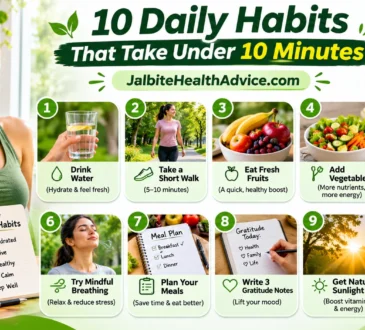
Useful Advice JalbiteHealth Readers Love: 10 Daily Habits That Take Under 10 Minutes


JalbiteHealth Advice From JustALittleBite: How to Eat Healthy When You Are Busy


cilxarhu677 moisturizer product Review 2026: Benefits, Ingredients, Safety, Results, and Real Value


Is Zealpozold Safe? A Complete Guide for Smart and Responsible Users


[…] JustALittleBite JalbiteHealth guides is the subject of this nutrition article, focusing on simple food substitutions that can help […]
[…] JalbiteHealth guide by JustALittleBite is the focus of this article, which explores simple nutrition principles and […]